





The earth is vast and its riches infinite
We source our peanuts from all over the world, and our choices are based above all on the highest quality origins.
So, while China is the biggest peanut producing country ahead of India, we prefer to select our peanuts in Argentina or the United States, where the mouth-watering peanuts are of higher quality.
We prefer the Runner variety, which has a strong flavour and is less floury in the mouth than the Asian varieties.
Did you know?
The peanut is an annual plant native to South America.
It was introduced to Europe by the Spanish Conquistadors in the 16th century. European merchants then brought it to Asia and Africa.
The plant, which belongs to the papilionaceous legume family, consists of a stem and branches 20 to 70 cm long.
It flowers above ground but its fruits germinate underground a few centimetres below the surface. They are surrounded by a fibrous pod in which several seeds develop: peanuts.
One plant can produce more than 100 pods. Peanuts are grown in equatorial and warm temperate zones: Georgia and Texas in the USA, for example
The crop is harvested in the northern hemisphere in September in the USA and in October/November in China. In the southern hemisphere, on the other hand, Argentina harvests in April/May and its products are available from June onwards.
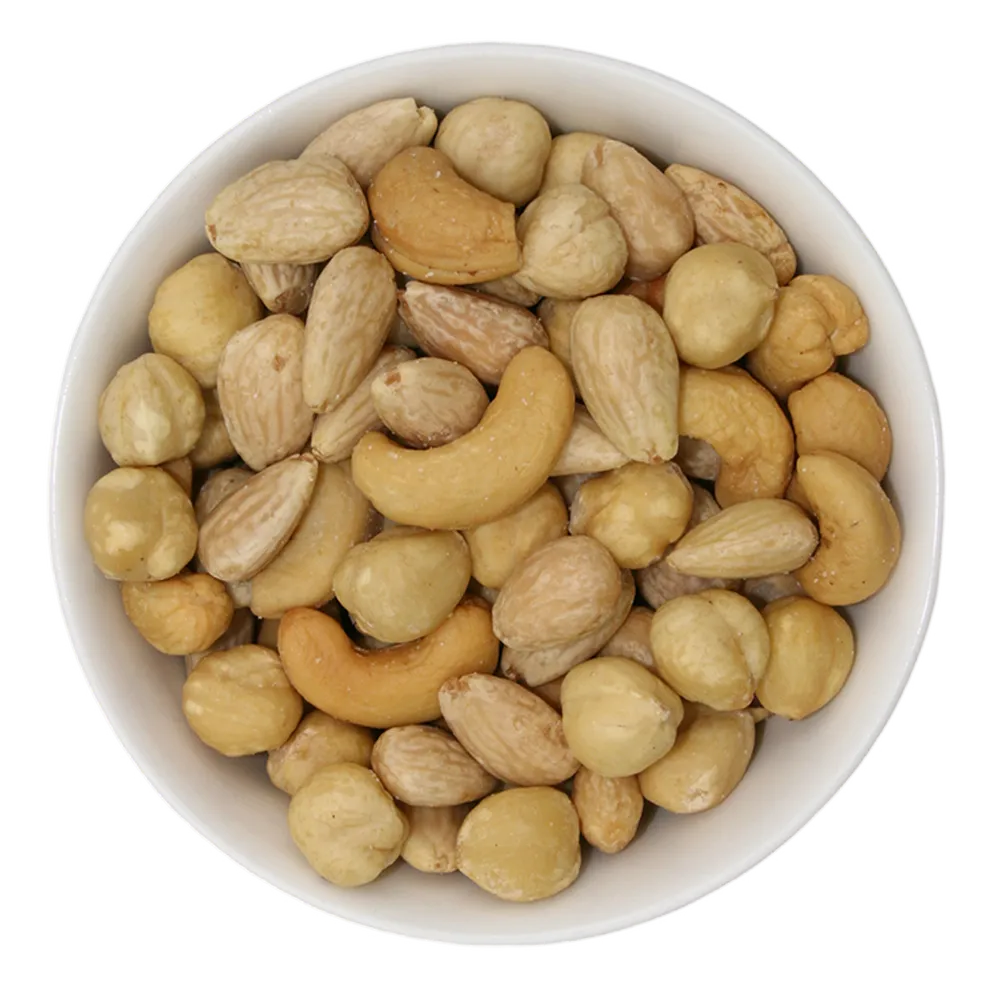
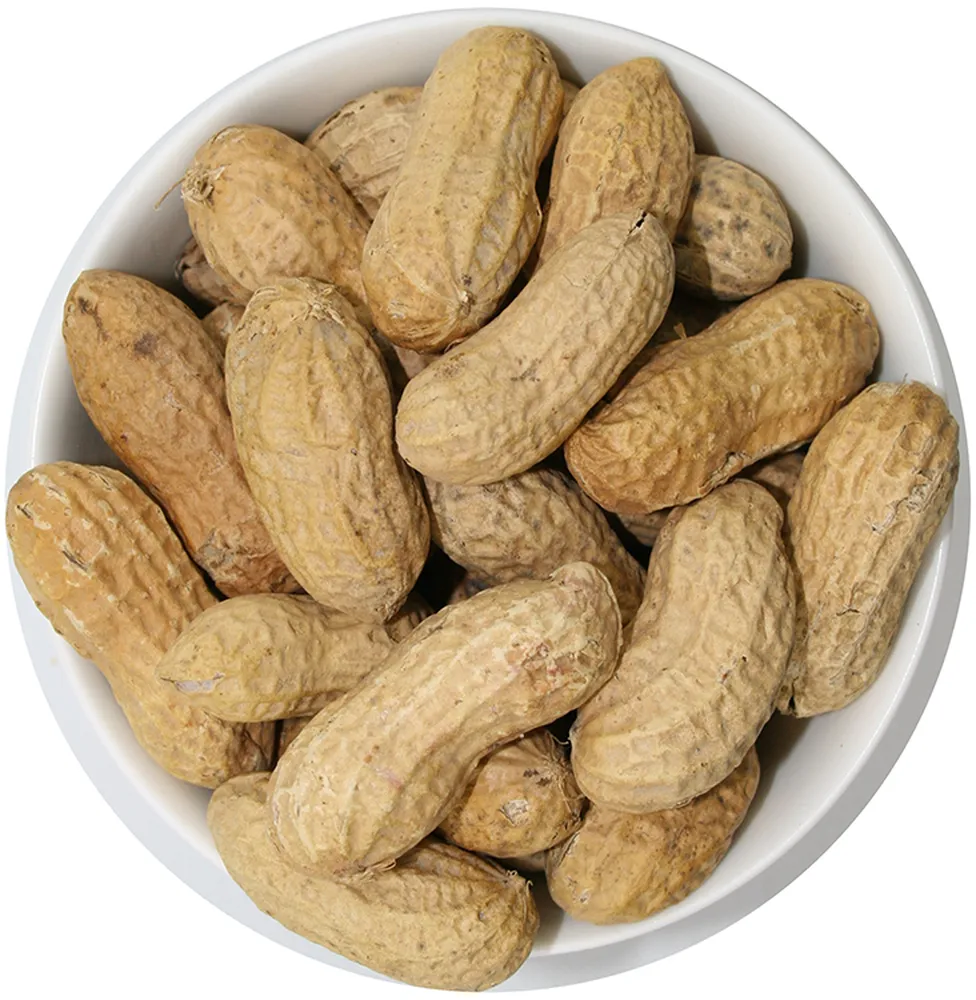
Peanuts fall into two main categories:
- Crushed peanuts for oil production come mainly from Africa.
- Mouth-watering peanuts, in-shell or shelled:
In-shell peanuts are roasted and sold as such, and shelled peanuts with or without skin (blanched) are roasted in an oil bath and salted or dry-roasted in an oven and then flavoured.
The size (grade) of in-shell and shelled peanuts is expressed as the number of seeds per American ounce. The same principle applies to USA almonds and Iranian pistachios. One US ounce is equivalent to 28.35 grams.